Respect for Ethical Standards and Rules of Integrity
Topic outline
-
-
Institutional Information
Nour Bachir University Center
Institute of Technology
Department of Electrical Engineering
Field: Electrical Engineering
Specialization: Electrical Machines and Renewable Energy in Electrical Engineering
Instructor Information
Dr. Ali Abderrazak Tadjeddine
Email: a.tadjeddine@cu-elbayadh.dz
Course Information
Course Title: Respect for Norms and Rules of Ethics and Integrity (RNREI)
Course Type: Transversal Course
Teaching Unit Identification Number: UET 1.2
Coefficient: 1
Credits: 1
Total Contact Hours: 22h30
Weekly Contact Hours: 1h30
Assessment Method: 100% Final Examination

Target Audience
This course is intended for first-year Master’s students enrolled in:
- Master’s
degree in Renewable Energy in Electrical Engineering;
- Master’s degree in Electrical Machines.
Academic Note
As a transversal course, RNREI is designed to strengthen students’ ethical awareness, professional responsibility, and integrity, complementing their technical and scientific training in electrical engineering and renewable energy systems.
- Master’s
degree in Renewable Energy in Electrical Engineering;
-
-
Forum
-
-
-
Course: Respect for Norms and Rules of Ethics and Integrity
Detail Value Semester 2 Teaching Unit UET 1.2 Subject Respect for Norms and Rules of Ethics and Integrity Total Hours (VHS) 22h30 (Lecture: 1h30) Credit 1 Coefficient 1 🎯 Course Objectives
The aims of this course are to develop students' awareness of and commitment to the ethical principles and rules that govern life within the university and in the professional world. Specifically, the course will:
Sensitize students to the respect for and valorization of intellectual property.
Explain the risks associated with moral vices, such as corruption, and outline methods for combating them.
Alert students to the ethical challenges raised by new technologies and sustainable development.

prerequisite Knowledge
Ethics and Professional Conduct (Foundations)
📋 Course Content
Chapter 1: Respect for Rules of Ethics and Integrity
1. Review of the MESRS (Ministry of Higher Education and Scientific Research) Charter on Ethics and Professional Conduct:
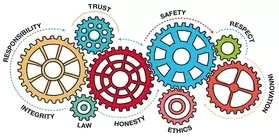
Integrity and Honesty.
Academic Freedom.
Mutual Respect.
Demand for Scientific Truth, Objectivity, and Critical Thinking.
Equity.
Rights and Obligations of students, faculty, and administrative/technical staff.
2. Responsible and Ethical Research:
Respect for ethical principles in teaching and research.
Responsibilities in teamwork: Professional equality of treatment, conduct against discrimination, pursuit of the general interest, and inappropriate conduct within the framework of collective work.
Adopting Responsible Conduct and Combating Misconduct:
Adopting responsible conduct in research.
Scientific Fraud: Conduct against fraud.
Plagiarism: Definition, different forms, procedures to avoid unintentional plagiarism, plagiarism detection, sanctions against plagiarists, etc.
Data Falsification and Fabrication.
3. Ethics and Professional Conduct in the World of Work:
Legal Confidentiality in business.
Fidelity to the company.
Responsibility within the company.
Conflicts of Interest.
Integrity: Corruption in the workplace (its forms, consequences, methods of combat, and sanctions against corruption).
Chapter 2: Intellectual Property
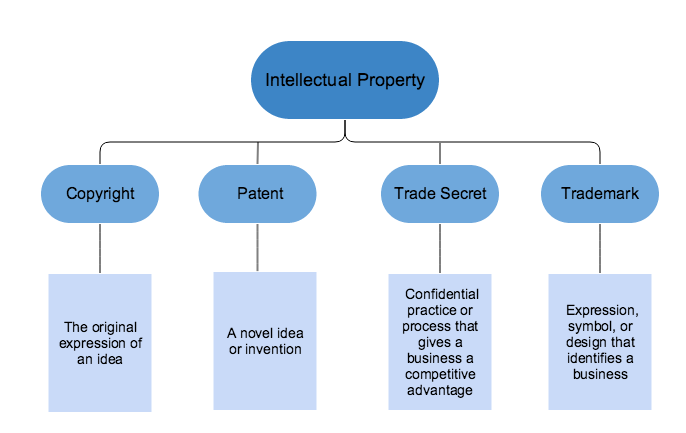
I. Fundamentals of Intellectual Property:
Industrial Property.
Literary and Artistic Property.
Rules for Citing References (books, scientific articles, conference communications, theses, dissertations, etc.).
II. Copyright:
Copyright in the Digital Environment:
Introduction.
Copyright for databases and software.
Specific case of Free and Open-Source Software (FOSS).
Copyright in the Internet and Electronic Commerce:
Domain name law.
Intellectual property on the internet.
E-commerce website law.
Intellectual property and social networks.
Patents:
Definition.
Rights conferred by a patent.
Utility of a patent.
Patentability.
Patent application procedures in Algeria and globally.
III. Protection and Valorization of Intellectual Property:
Methods for protecting intellectual property.
Violation of rights and legal tools.
Valorization of intellectual property.
Protection of intellectual property in Algeria.
Chapter 3: Ethics, Sustainable Development, and New Technologies
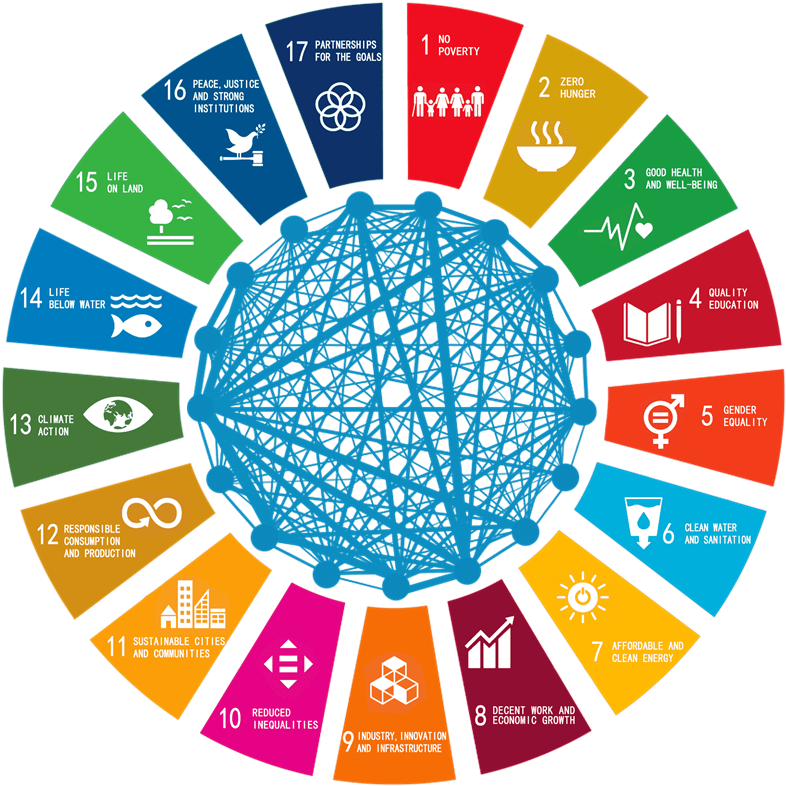
Connection between Ethics and Sustainable Development.
Energy Conservation (Efficiency).
Bioethics and New Technologies (Artificial Intelligence, scientific progress, Humanoids, Robots, Drones, etc.).
-
File
-
-
-
Preface
This course manual, entitled “Respect for Ethical Standards and Rules of Integrity,” is intended for first-year Master’s students in Electrical Machines and Renewable Energy in Electrical Engineering, Semester 2, as part of the Teaching Unit UET 1.2.2. It falls within the Electrical Engineering specialization and aims to complement students’ scientific and technical skills with cross-disciplinary training in ethics, integrity, and professional responsibility.
In a context marked by the rapid acceleration of technological progress, the energy transition, digitalization, and the rise of intelligent systems, engineers and researchers are confronted with major ethical challenges. Mastery of technical tools, however advanced, cannot be dissociated from in-depth reflection on individual and collective responsibility, respect for intellectual property, environmental protection, and the societal impact of innovation.
This course aims to raise students’ awareness of the fundamental principles of ethics and integrity, applicable both in academic settings and in the professional and industrial world. It seeks to foster a culture of intellectual honesty, responsible research, and respect for standards and professional ethics, while preparing students to fully assume their role as future engineers or technical executives.
Particular attention is given to issues directly related to the field of electrical machines, such as scientific research, energy efficiency, intellectual property, technological innovation, artificial intelligence, robotics, and autonomous systems. These themes are addressed from the perspectives of ethics, sustainable development, and social responsibility, with the aim of training professionals who are aware of the technical, economic, and human consequences of their decisions.
Writing Methodology
This course handbook has been developed with the utmost care to ensure clarity of concepts, scientific rigor, and suitability for the Master’s level. However, as perfection is difficult to achieve, any comments, suggestions, or corrections from instructors and students will be welcomed with great interest. Such feedback will contribute to the continuous improvement of this educational material for the benefit of future cohorts.

Pedagogical Organization of the Course
To facilitate learning and ensure a logical progression of knowledge, each chapter of this course is structured coherently according to the following framework:
1. Introduction: Presentation of the chapter objectives and contextualization of the concepts addressed.
2. Theoretical Development: Detailed explanation of concepts, principles, and normative frameworks, illustrated with concrete examples.
3. Case Studies and Applied Examples: Practical illustration of ethical concepts in academic, scientific, and industrial contexts, particularly in the field of electrical machines.
4. Summary and Conclusion: Recapitulation of key ideas and transition toward subsequent chapters.
This approach aims to promote progressive understanding, critical thinking, and lasting internalization of ethical and professional values.

Course Structure
In accordance with the course syllabus, this course is organized into three main chapters, distributed over the semester:
Chapter
Title
Indicative Duration
Chapter 1
Respect for Ethical Rules and Integrity
Week 4
Chapter 2
Intellectual Property
Week 4
Chapter 3
Ethics, Sustainable Development, and New Technologies
Week 4
Overall Objective of the Course Handbook
At the end of this course, the student will be able to:
- Identify and apply the rules of academic ethics and integrity;
- Adopt a responsible scientific research approach;
- Respect the principles of intellectual property;
- Assess the ethical issues related to new technologies and sustainable development;
- Act as a responsible engineer, fully aware of their role in society.
-
File
-
-
-
Prerequisites
The evaluation focuses not only on theoretical knowledge, but also on students’ ability to analyze ethical situations, apply normative frameworks, and demonstrate critical and responsible judgment in engineering-related contexts.
Students enrolling in this course are expected to have:
-
Basic knowledge of ethics and professional conduct;
-
Familiarity with university regulations and academic practices;
-
An introductory understanding of scientific research and academic writing principles.
These prerequisites ensure that students can fully engage with ethical reasoning, integrity standards, and intellectual property issues discussed throughout the course.
Evaluation
Student performance in this course is assessed through:
-
Final Examination: 100%
The final examination evaluates students’ understanding of:
-
Ethical principles and rules of integrity in academic and professional contexts;
-
Responsible research practices and prevention of misconduct;
-
Fundamentals of intellectual property and citation standards;
-
Ethical challenges related to sustainable development and emerging technologies.
-
-
Quiz
-
-
-

-
Lesson
-
File
-
-
-

References
Respect for Ethical Standards and Rules of Integrity
[1] S. J. Chapman, Electric Machinery Fundamentals, 5th ed. New York, NY, USA: McGraw-Hill, 2012.
[2] P. C. Krause, O. Wasynczuk, S. D. Sudhoff, and S. Pekarek, Analysis of Electric Machinery and Drive Systems, 3rd ed. Hoboken, NJ, USA: Wiley-IEEE Press, 2013.
[3] R. Krishnan, Permanent Magnet Synchronous and Brushless DC Motor Drives. Boca Raton, FL, USA: CRC Press, 2010.
[4] J. Holtz, “Sensorless control of induction motor drives,” Proceedings of the IEEE, vol. 90, no. 8, pp. 1359–1394, Aug. 2002.
[5] M. Depenbrock, “Direct self-control (DSC) of inverter-fed induction machines,” IEEE Transactions on Power Electronics, vol. 3, no. 4, pp. 420–429, Oct. 1988.
[6] A. E. Fitzgerald, C. Kingsley, and S. Umans, Electric Machinery, 7th ed. New York, NY, USA: McGraw-Hill, 2013.
[7] IEC 60034-2-1, Rotating Electrical Machines – Methods for Determining Losses and Efficiency. Geneva, Switzerland: International Electrotechnical Commission, 2014.
[8] UNESCO, Ethics of Artificial Intelligence. Paris, France, 2021.
[9] World Intellectual Property Organization (WIPO), Intellectual Property Handbook: Policy, Law and Use, 2nd ed. Geneva, Switzerland, 2004.
[10] European Commission, Ethics Guidelines for Trustworthy Artificial Intelligence. Brussels, Belgium, 2019.
[11] OECD, Recommendation of the Council on Artificial Intelligence. Paris, France, 2019.
[12] Ministry of Higher Education and Scientific Research (MESRS), University Charter of Ethics and Professional Conduct. Algeria, Aug. 2023.
[13] ISO 26000, Guidance on Social Responsibility. Geneva, Switzerland: International Organization for Standardization, 2010.
[14] IEEE, IEEE Code of Ethics. New York, NY, USA: IEEE, latest revision.
[15] A. Author, “Modeling and control of induction motors using MATLAB/Simulink,” Master’s thesis, Department of Electrical Engineering, University Name, Country, 2020.
End
Respect for Ethical Standards and Rules of Integrity
-
Chat
-